Booking choice: The Valley Forge half-day tour, from $149 per person. Check dates Tour details
In September 1777 the British took Philadelphia, then the American capital. Washington's army had fought hard at Brandywine, Germantown and Whitemarsh and failed to stop them. For the winter he chose Valley Forge, a high plateau about a day's march from the city, named after an iron forge on Valley Creek that the British had burned that autumn.
The story people learn at school is of starving soldiers leaving bloody footprints in the snow. The National Park Service tells a more interesting one, and this guide follows it month by month.
The quick answer
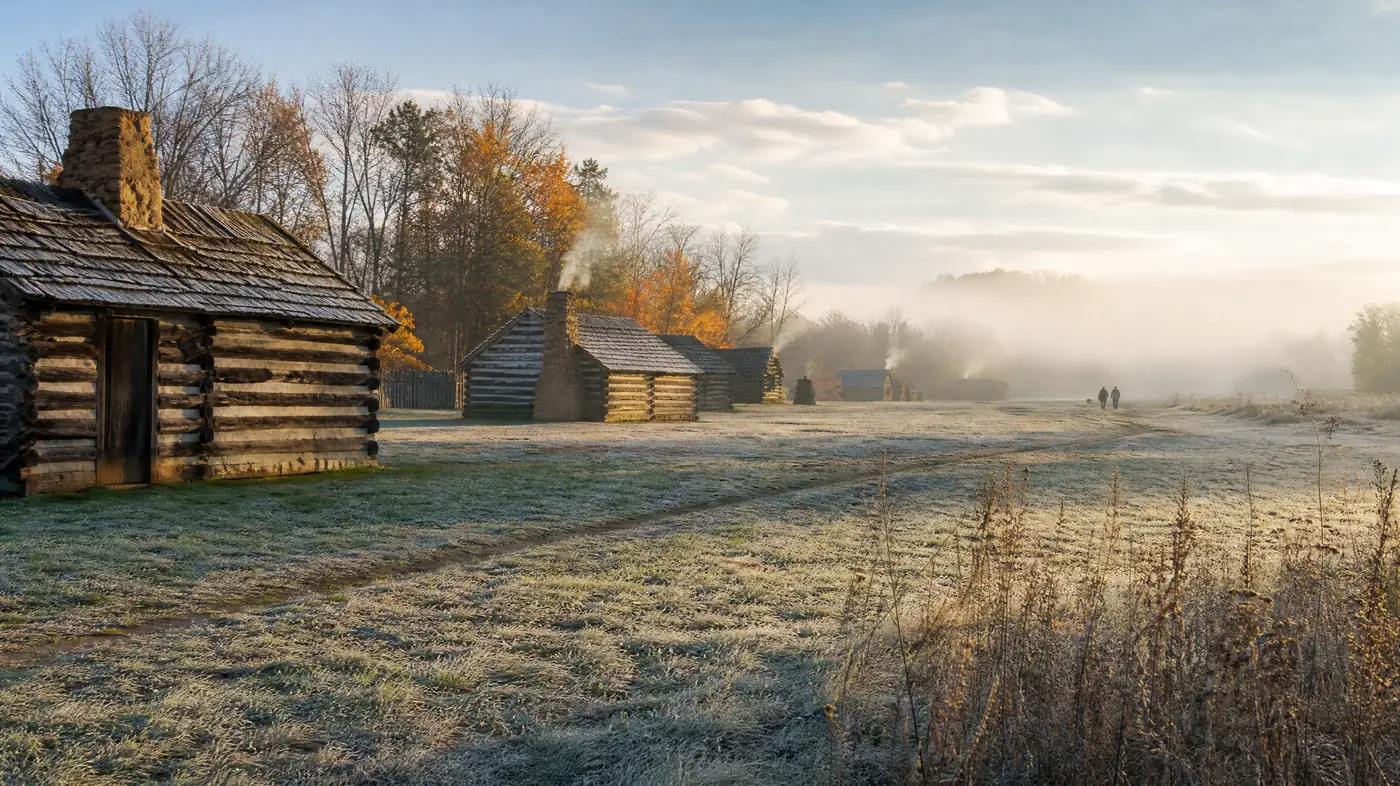
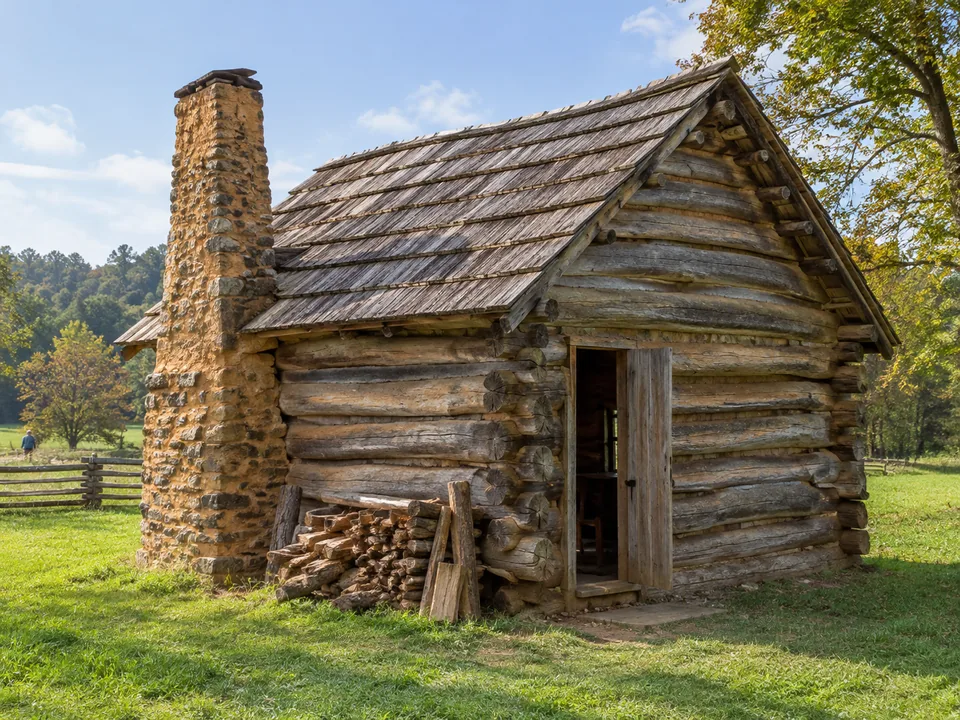
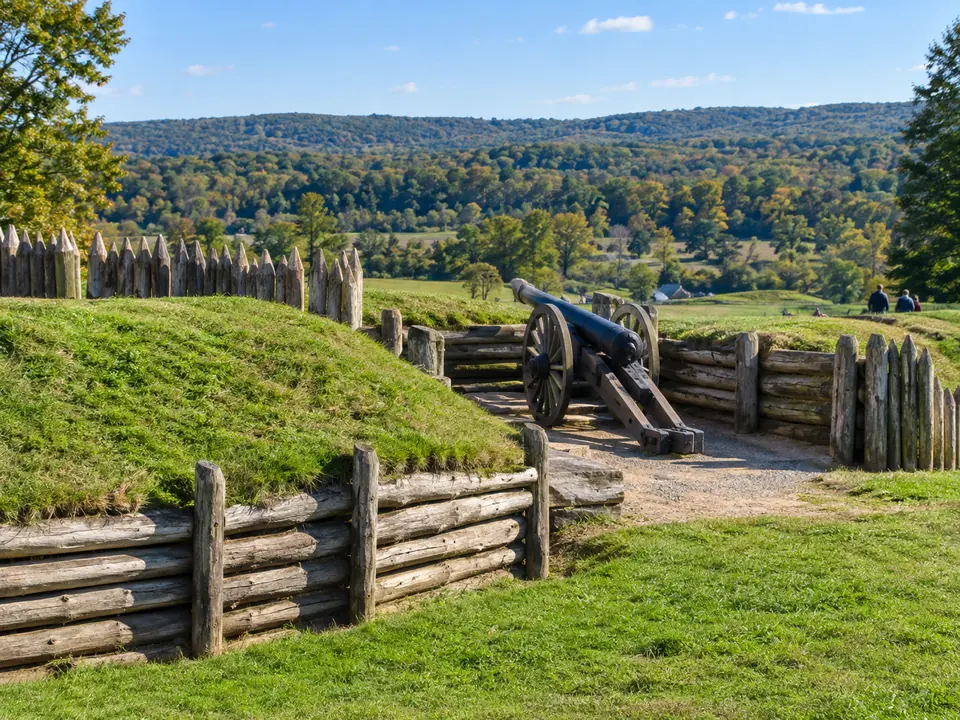
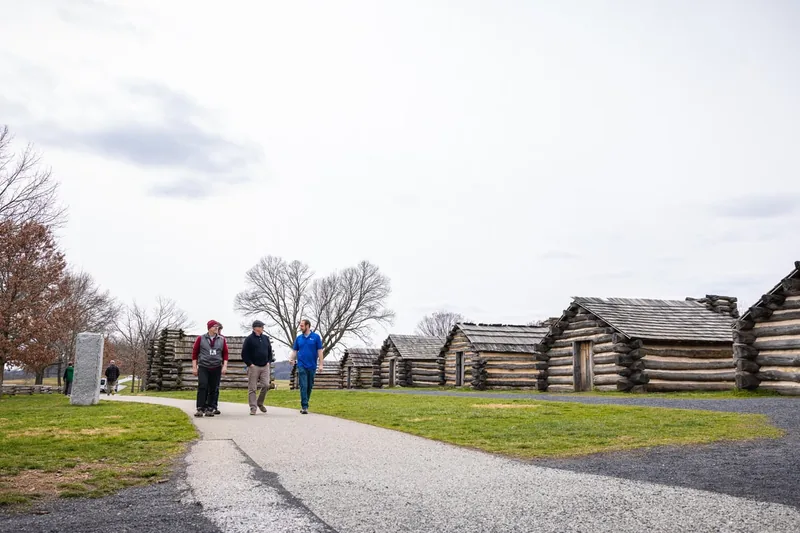
On 19 December 1777 more than 12,000 soldiers and about 400 women and children marched into Valley Forge. They built more than 1,500 log huts, two miles of fortifications and five earthen forts. There was no battle, but disease (influenza, typhus, typhoid and dysentery) killed nearly 2,000 people, two-thirds of them in March, April and May. From February, Baron von Steuben drilled the army into a professional force. Word of the French alliance came in May, and on 19 June 1778 the army, nearly 20,000 strong by late spring, marched out after the British.
What happened at Valley Forge in simple terms?
The Continental Army spent the winter of 1777-78 camped here, about 20 miles from British-held Philadelphia, and came out of it a trained, disciplined army.
Washington needed a place close enough to watch the British and protect the countryside, but strong enough to resist an attack. Valley Forge had high ground, the Schuylkill River on one side and Valley Creek on another. Bad roads and winter weather made big battles unlikely, which gave the army time to rest, rebuild and train.
The camp became, in effect, the fourth largest city in the colonies. One officer wrote that it "had the appearance of a little city" from a distance.
What happened at Valley Forge month by month?
The march-in in December, hut building and short rations in winter, von Steuben's drill from late February, disease in spring, and the march-out in June.
The National Park Service's history of the camp gives a clear timeline.
| When | What happened |
|---|---|
| 19 December 1777 | More than 12,000 soldiers and about 400 women and children march in. Until the huts are built, they sleep in tents and brush shelters. |
| January 1778 | Hut building in squads, to a 14 by 16 foot plan. Army records show an average daily ration of half a pound of beef. |
| February | The worst food crisis: days at a time without meat. Von Steuben arrives on 23 February. |
| Early March | 2,898 men listed unfit for duty for lack of clothing. Better-equipped units cover their patrols. |
| March to May | Drill on the Grand Parade. Disease peaks: two-thirds of all deaths come in these three months. |
| May | News of the alliance with France. Von Steuben is commissioned Major General and Inspector General on 6 May. |
| 19 June 1778 | The British have left Philadelphia for New York; the army, nearly 20,000 strong, marches out in pursuit. |
How many soldiers died at Valley Forge, and what killed them?
Nearly 2,000 people died, all of disease. Influenza, typhus, typhoid and dysentery were the main killers.
The surprise is the timing. Two-thirds of the deaths came in March, April and May, when the worst of the winter and the worst of the supply shortages were over. Thousands of people living close together, with poor sanitation and spring thaws, let disease spread through the camp.
It could have been worse. The army inoculated soldiers against smallpox, surgeons treated the sick, and new camp rules on latrines and cleanliness cut the toll.
Hear the full story where it happened, with a guide who has told it many times.
Check dates for the Valley Forge half-day tourDid soldiers really starve and freeze at Valley Forge?
Not in the way the legend says. The winter was neither the coldest nor the snowiest of the war, and the worst hunger lasted weeks, not months.
The National Park Service is direct about the myth. The image of soldiers in rags leaving bloody footprints in the snow, it says, does the army a disservice. Conditions were hard: freezing and thawing, rain, mud, short rations and not enough shoes or clothes. But the soldiers were not helpless. They built their own cabins, made clothing and gear, cooked what they had, and kept patrolling and foraging.
They marched in tired and ill-supplied, not beaten. They had come close to beating the British that autumn, and they knew it.
Who was Baron von Steuben and what did he do at Valley Forge?
A former Prussian officer who arrived on 23 February 1778 and taught the army one standard drill. His training made it a professional fighting force.
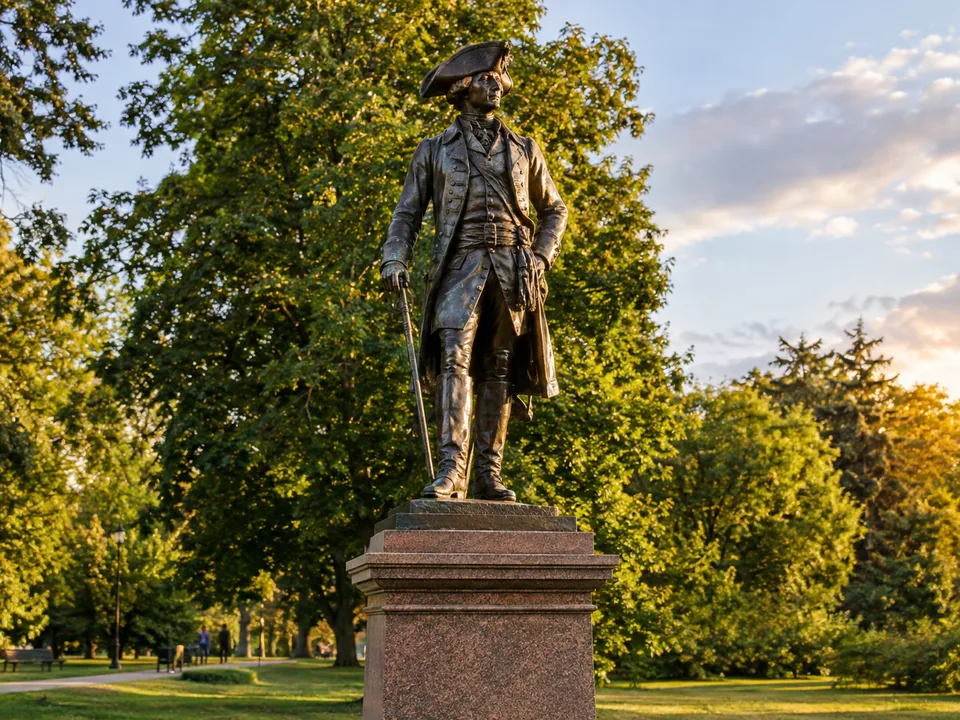
Until then, each state's units drilled in their own way. Von Steuben picked a model company of about 120 men from Washington's guard and from each state, drilled them himself on the Grand Parade, and had them demonstrate every new lesson to the rest. The drill spread fast. His regulations, the "Blue Book", were approved by Congress in March 1779 and used by the US Army until 1814.
His statue, stop 8 on the Encampment Tour, looks out over the parade ground where it happened.
Who was at the Valley Forge encampment?
Free and enslaved African American soldiers and civilians, Indigenous allies, European immigrants, wealthy officers and poor enlisted men, plus about 400 women and children.
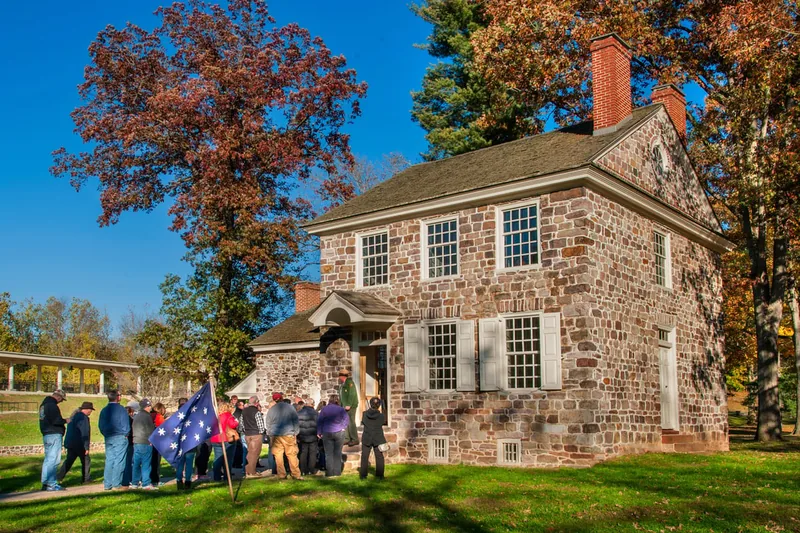
The camp was as mixed as any city of its day, with several languages and religions. Washington's own household at the Isaac Potts House included aides such as John Laurens and Alexander Hamilton, and both paid and enslaved servants, among them Elizabeth Thompson and Hannah Till. Much of that house is original. It is closed for restoration until 2027, when it reopens for the 250th anniversary of the march-in.
A private guide who can spend longer on the people you care about, from Washington's household to the soldiers in the huts.
Explore the private Valley Forge tour Tour detailsWas there a battle at Valley Forge?
No. No battle was ever fought at Valley Forge. The army trained here and fought again shortly after leaving, at Monmouth Courthouse in New Jersey.
Valley Forge matters for what happened off the battlefield. Washington persuaded Congress to fix the supply system, von Steuben fixed the drill, and the camp brought reforms in hygiene and organisation that the National Park Service calls the foundation of the modern US Army. With France now an ally, the British left Philadelphia, and the war moved north.
What happened to Valley Forge after the war?
It became Pennsylvania's first state park in 1893 and a national park on 4 July 1976, when President Ford signed the law.
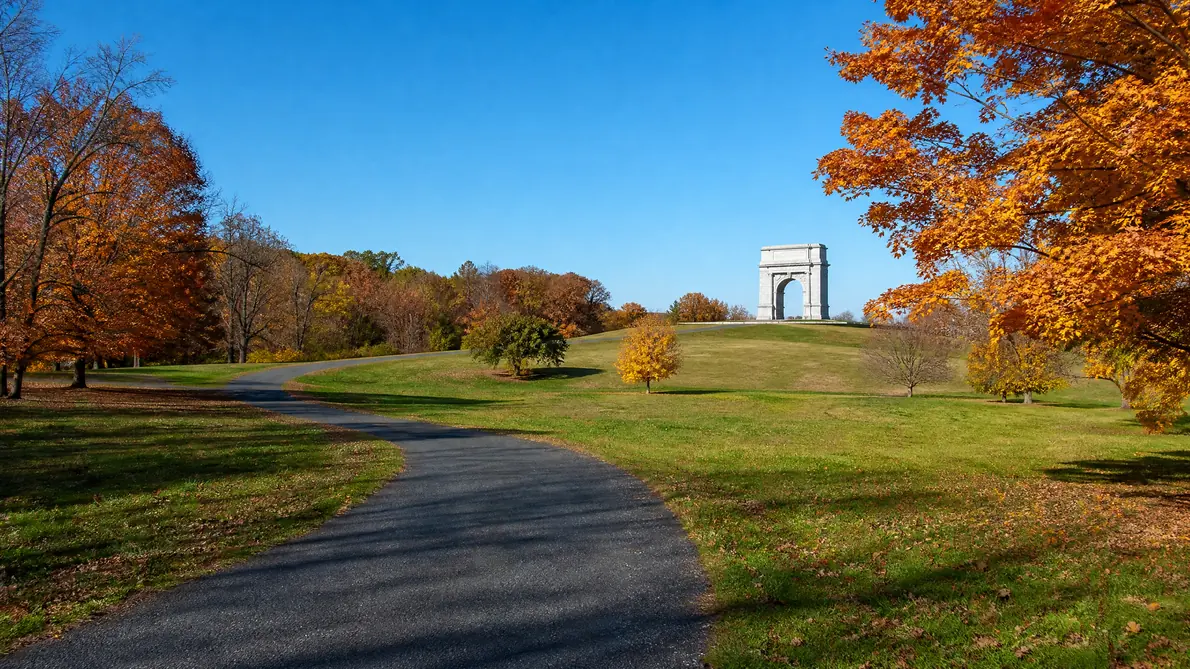
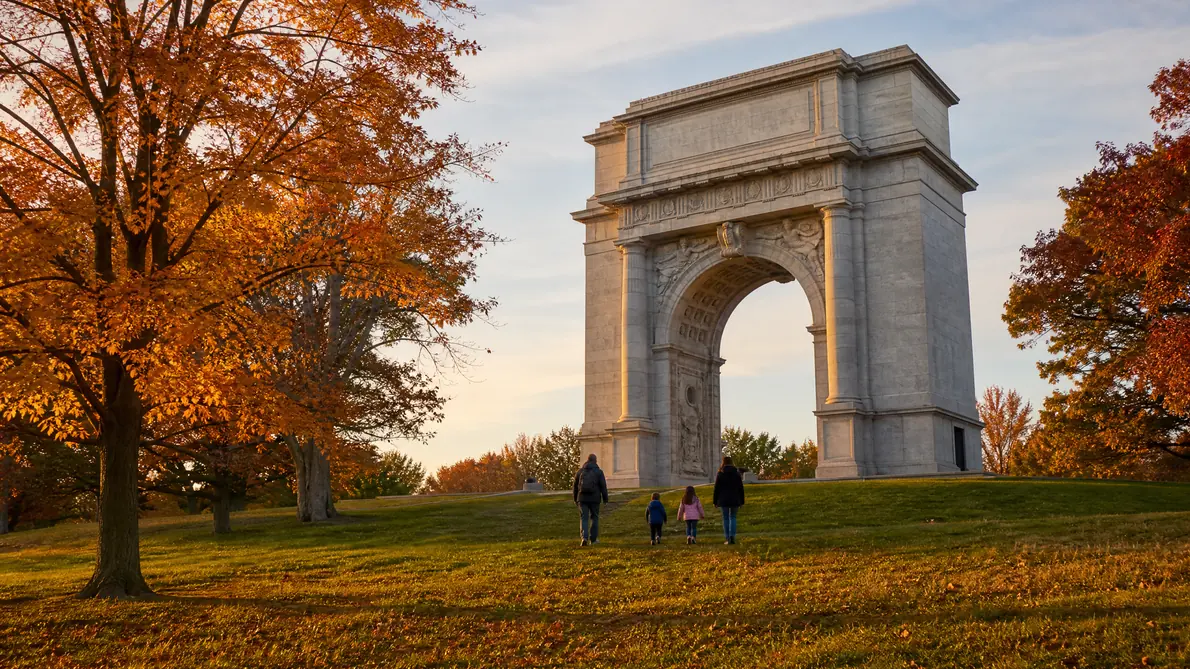
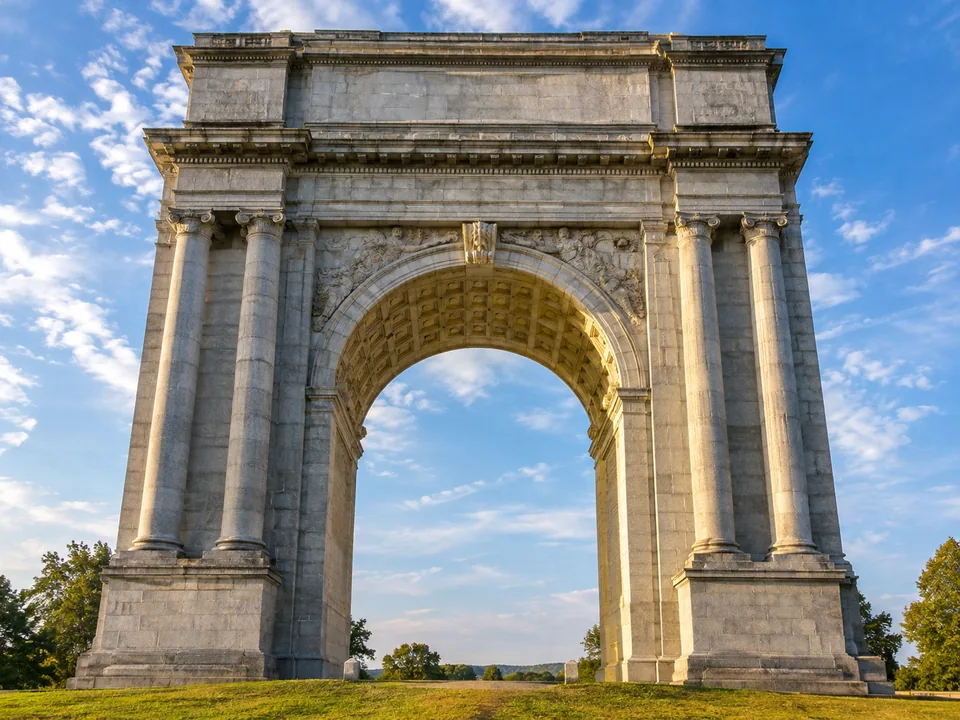
The National Memorial Arch, designed by Paul Philippe Cret, was dedicated on 19 June 1917, the anniversary of the march-out. Washington Memorial Chapel went up between 1903 and 1917 on private land. 2026 is the park's 50th year as a national park and the nation's 250th, and the next big dates are the Encampment 250 events, from the Great Marching In on 19 December 2027 to the Great Marching Out on 19 June 2028.
Washington's own war tent, used through the Revolution, is in Philadelphia at the Museum of the American Revolution. Its predecessor, the Valley Forge Historical Society, bought the tent in 1909. The America 250 post covers this year's events.
See Washington's war tent and the films about it, with two days to explore the museum.
Check dates for the Museum of the American Revolution ticketFrequently asked questions
Why is Valley Forge important?
It is where the Continental Army became a trained, unified force. The supply, drill and hygiene reforms of that winter shaped the US Army.
How many people died at Valley Forge?
Nearly 2,000, all from disease. Two-thirds of the deaths came in March, April and May 1778.
How long was the army at Valley Forge?
Six months, from the march-in on 19 December 1777 to the march-out on 19 June 1778.
Did Washington live in a hut at Valley Forge?
No. He and his household lived and worked in the stone Isaac Potts House, now called Washington's Headquarters.
Ready to book
Choose your tour
Free cancellation up to 24 hours before on every option. Prices are from-prices in USD and move with the season.
Valley Forge Half-Day Tour from Philadelphia
- Round-trip transport from Philadelphia
- Tour guide
- Donation to Valley Forge National Historical Park
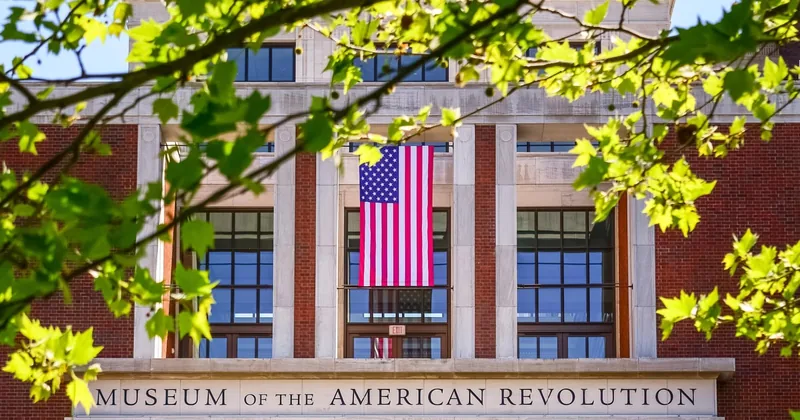
Museum of the American Revolution Ticket
- Admission for 2 consecutive days
- Orientation film "Revolution"
- Film "Washington's War Tent"
Valley Forge Private Driving Tour
- Private local guide
- Pickup and drop-off in Philadelphia
- All parking fees